Insight
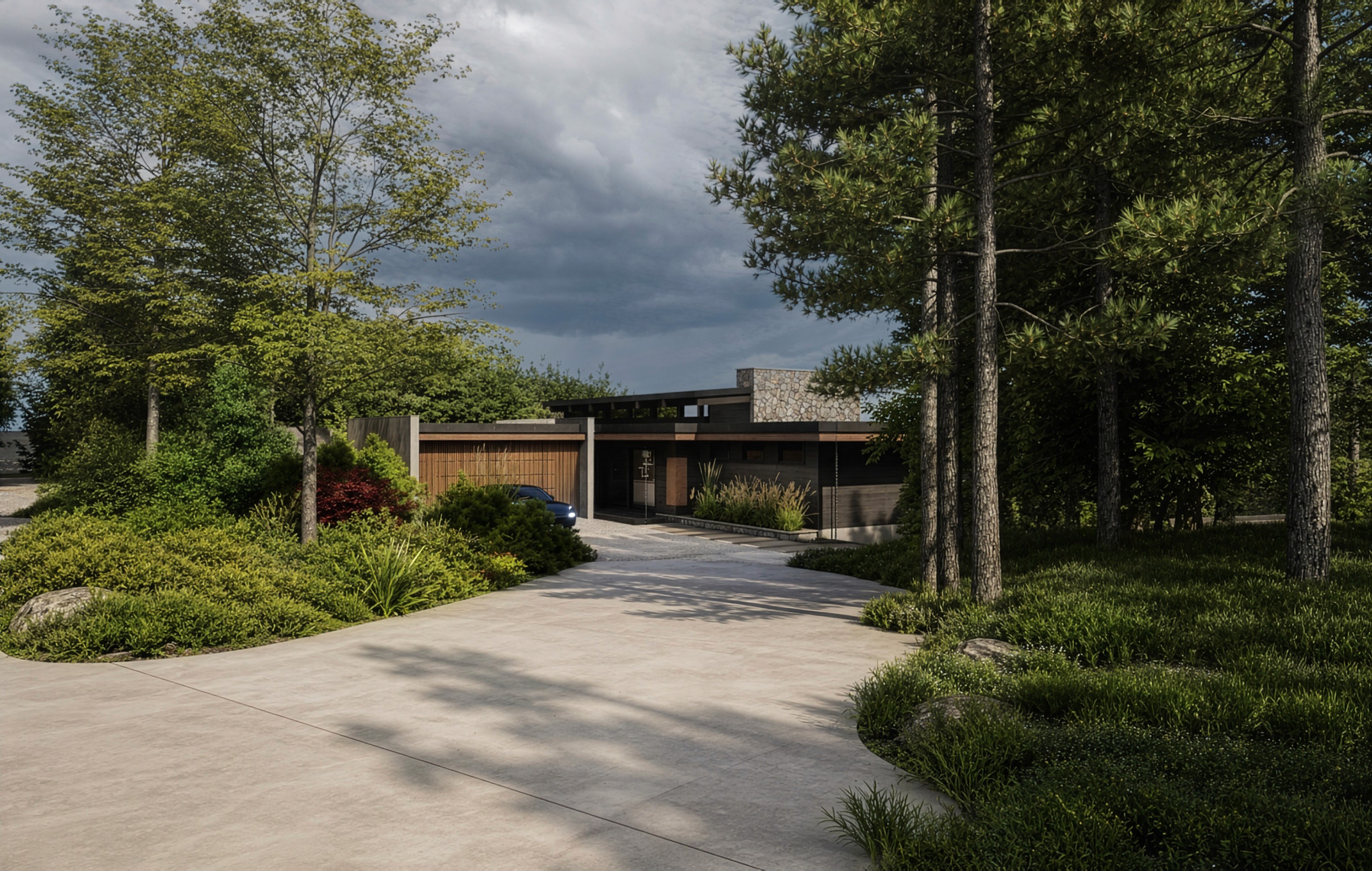
Some of the most memorable homes are built on the most challenging sites.
Steep terrain, rocky landscapes, dense tree coverage, waterfront setbacks, irregular property lines, and difficult access conditions can initially feel limiting. But in custom residential design, these constraints often create the strongest opportunities for thoughtful architecture.
At JCDW, we see challenging sites not as problems to overcome, but as opportunities to create homes that feel deeply connected to their surroundings.
Every Site Has a Story
The best homes begin with understanding the land itself.
Before floor plans or exterior materials are considered, the site reveals important opportunities:
where natural light enters throughout the day
how the terrain moves
where privacy naturally exists
which views should be preserved
how the home should approach the landscape
A successful design responds to these conditions rather than fighting against them.
In many cases, the land itself becomes the foundation for the architectural experience.
Sloped Lots Create Better Spaces
Sloped properties are often seen as difficult to design around, but they can create some of the most dynamic and engaging homes.
Changes in elevation allow for:
walkout lower levels
dramatic ceiling heights
layered interior experiences
protected outdoor spaces
stronger visual connection to the landscape
Rather than flattening a site unnecessarily, thoughtful design can use the natural topography to create spaces that feel integrated and intentional.
Some of the most compelling modern cottages and custom homes in Ontario are shaped directly by the terrain beneath them.
Waterfront Design Requires Balance
Designing along lakes and shorelines introduces another layer of complexity.
Conservation authority regulations, setbacks, grading restrictions, septic limitations, and shoreline preservation all influence how a home can be positioned and experienced. But these constraints often lead to better architectural outcomes.
Thoughtful waterfront design focuses on:
preserving natural views
minimizing environmental disruption
balancing privacy and openness
orienting spaces toward the water
creating a gradual connection between indoor and outdoor living
The goal is not simply to maximize glass or square footage overlooking the lake. It is to create a home that feels calm, grounded, and respectful of its setting.
Tree Preservation Can Improve Architecture
Forested sites offer an incredible sense of privacy and atmosphere, but they require careful planning.
Instead of clearing large portions of a property, strategic placement of the home can allow mature trees to become part of the architecture itself. Approaching a home through a dense canopy or framing views between trunks often creates a far stronger experience than a fully exposed site.
Retaining natural vegetation can also improve:
seasonal comfort
wind protection
visual privacy
integration into the landscape
In many cases, the landscape becomes one of the home’s most valuable architectural features.
Constraints Often Lead to More Thoughtful Design
Some of the strongest architectural ideas emerge from limitations.
A narrow building envelope may create stronger sightlines. A setback restriction may improve outdoor living spaces. Bedrock conditions may inspire a more integrated foundation approach. Limited access may simplify the overall form of the home in a positive way.
Constraints force prioritization.
Rather than relying on excess, the design becomes more intentional, more refined, and more connected to the experience of living on the property.
Technical Coordination Matters
Complex sites require more than good aesthetics.
Successful projects depend on coordination between:
surveyors
structural engineers
grading consultants
mechanical designers
conservation authorities
builders and trades
Clear documentation and thoughtful planning help ensure the architectural vision can actually be executed efficiently during construction.
Without strong coordination, difficult sites can quickly lead to costly revisions and construction challenges.
Architecture That Belongs to the Landscape
The most successful homes feel inseparable from their surroundings.
They do not appear imposed onto the land. Instead, they feel shaped by it — responding to the terrain, light, trees, views, and natural conditions of the property itself.
At JCDW, we believe great architecture comes from understanding both the opportunities and limitations of a site. Through thoughtful design and technical clarity, even the most challenging properties can become the foundation for exceptional homes and cottages that feel timeless, grounded, and deeply connected to place.